
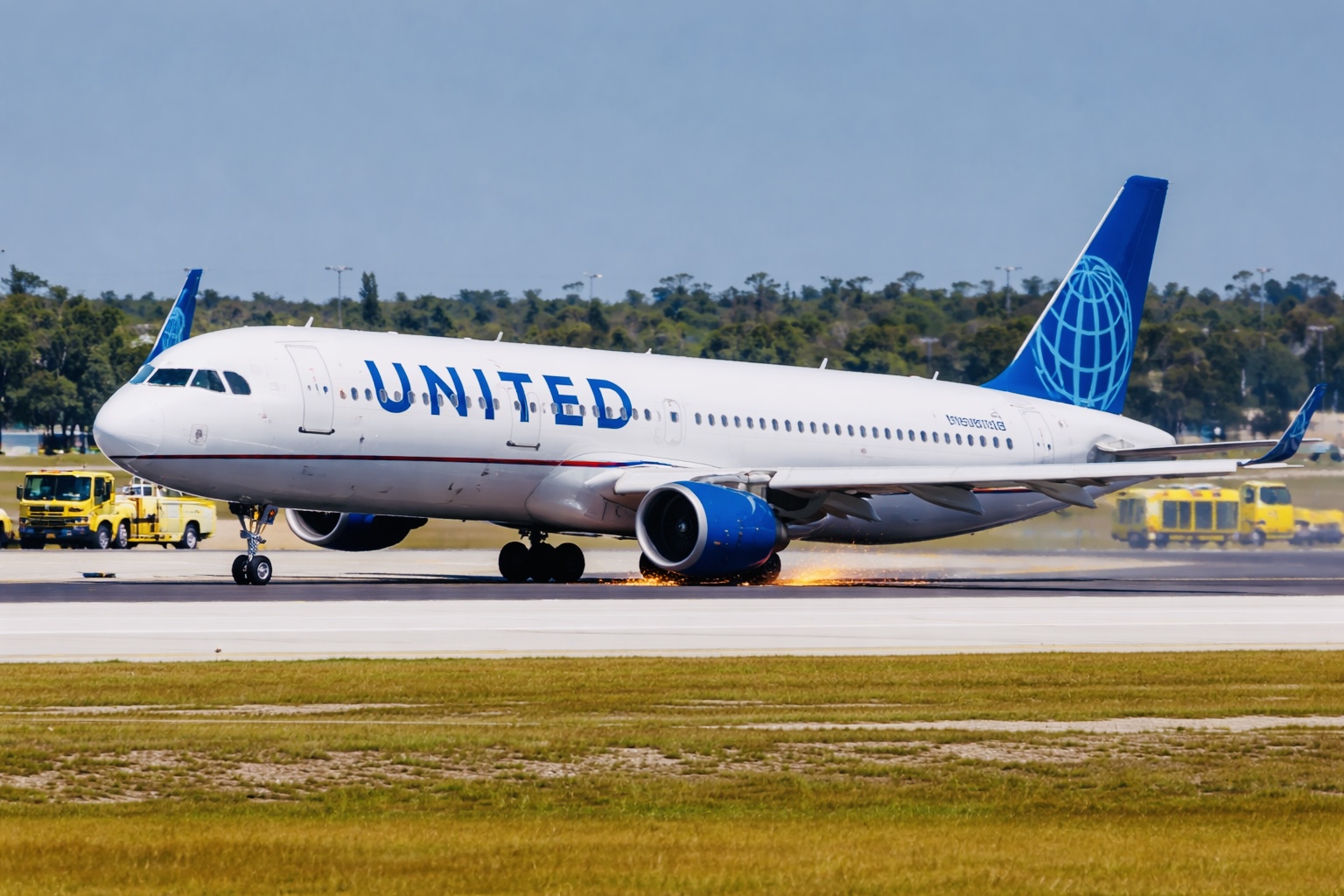
Orlando, January 18, 2026 — A United Airlines Airbus A321neo lost a nose wheel following a hard landing at Orlando International Airport (MCO) on Sunday afternoon, prompting a temporary ground stop and disrupting airport operations during a busy travel period.
The incident involved United flight UA2323, operating from Chicago O’Hare (ORD) to Orlando, which landed shortly after 12:30 p.m. local time. The aircraft, a two-year-old A321neo registered N14502, experienced a rough touchdown amid gusty wind conditions.
Video footage shared on social media shows the aircraft touching down initially on the left main landing gear, followed by the right. The jet then appeared to bounce, shifting weight unevenly before the nose landing gear made contact with the runway. Moments later, one of the nose wheels separated from the aircraft, which subsequently came to a stop on the runway.
Airport authorities temporarily halted all arrivals and departures while emergency crews responded and the aircraft was secured and removed. No injuries were reported among passengers or crew.
United Airlines confirmed the aircraft has been taken out of service and will undergo a thorough inspection. It remains unclear whether the damage is limited to the landing gear or if there is additional structural impact that could extend repair time.
While strong winds were reported at the time, aviation experts note that weather alone may not fully explain the sequence of events, and investigators are expected to review flight data, crew actions, and aircraft systems to determine the cause.
The Federal Aviation Administration (FAA) is expected to investigate the incident. United has not yet provided a timeline for the aircraft’s return to service.
Bottom line: A hard landing by a United Airlines A321neo in Orlando resulted in the loss of a nose wheel, briefly shutting down airport operations. All passengers and crew were safe, but the incident caused significant operational disruption and has raised questions about the factors leading to the landing gear failure.




Facebook Comments