
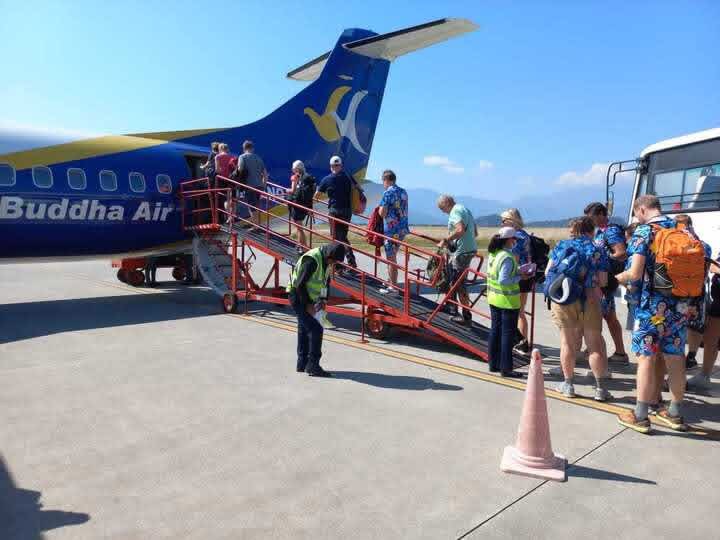
A Buddha Air flight scheduled from Bhairahawa to Kathmandu faced a significant delay on Wednesday, January 14, 2026, after a passenger opened the aircraft’s emergency exit without authorization. The incident occurred on Flight 852 as the plane was on the ground preparing for departure, leading to the immediate intervention of airport security personnel who took the passenger, identified as Suman Gautam, into custody. Following strict aviation safety protocols, the airline was forced to ground the aircraft for a comprehensive technical inspection to ensure the door’s seal and deployment mechanisms remained intact. A specialized engineering team was dispatched from Kathmandu to Bhairahawa to conduct these checks, as the integrity of the exit is critical for maintaining cabin pressure during flight.
The unauthorized opening of the door caused a chain reaction of operational disruptions, with passengers being deplaned while the technical assessment took place. Although the flight was initially scheduled for a morning departure, tracking data indicated it finally arrived at Tribhuvan International Airport in Kathmandu approximately two hours and 47 minutes behind schedule. Buddha Air has maintained a zero-tolerance policy for such actions, noting that similar past offenders have been fined Rs 100,000 and faced potential blacklisting. Under the Civil Aviation Act 2015, such disruptions are considered serious offenses that can carry legal penalties ranging from heavy fines to imprisonment, reflecting the severe safety risks and financial losses associated with tampering with emergency equipment.
In light of the unauthorized opening of the emergency exit on Buddha Air Flight 852, the legal consequences for the passenger, Suman Gautam, are expected to be severe based on Nepal’s strict aviation security laws. Under the Civil Aviation Act 2015, any act that endangers the safety of an aircraft or its passengers, including the unauthorized tampering with emergency equipment, is a punishable offense. The legal charges typically filed in such cases fall under Section 9 A (3)(b), which covers "offenses against the safety of air." Conviction can lead to a prison sentence ranging from one to three years, depending on the extent of the disruption and the perceived risk to flight safety. Additionally, the passenger is currently under interrogation by airport security and police in Bhairahawa, where the final nature of the charges—ranging from a simple misdemeanor to a more serious criminal case—is being determined.
Regarding financial penalties, Buddha Air has established a clear precedent of imposing a fine of Rs 100,000 for such incidents. The airline justifies this amount not only as a deterrent but also to recover a portion of the significant operational costs incurred, such as flying a technical team from Kathmandu to inspect the aircraft. In keeping with their corporate social responsibility policy, Buddha Air has famously donated these fine amounts to charitable organizations, such as old age homes or cultural sites like the Mahaganga Aarti in Janakpur. Beyond the legal and financial penalties, the passenger also faces being blacklisted, which would permanently ban them from flying with Buddha Air and potentially other domestic carriers in Nepal, as the airline seeks to maintain a strict zero-tolerance environment for safety breaches.




Facebook Comments