
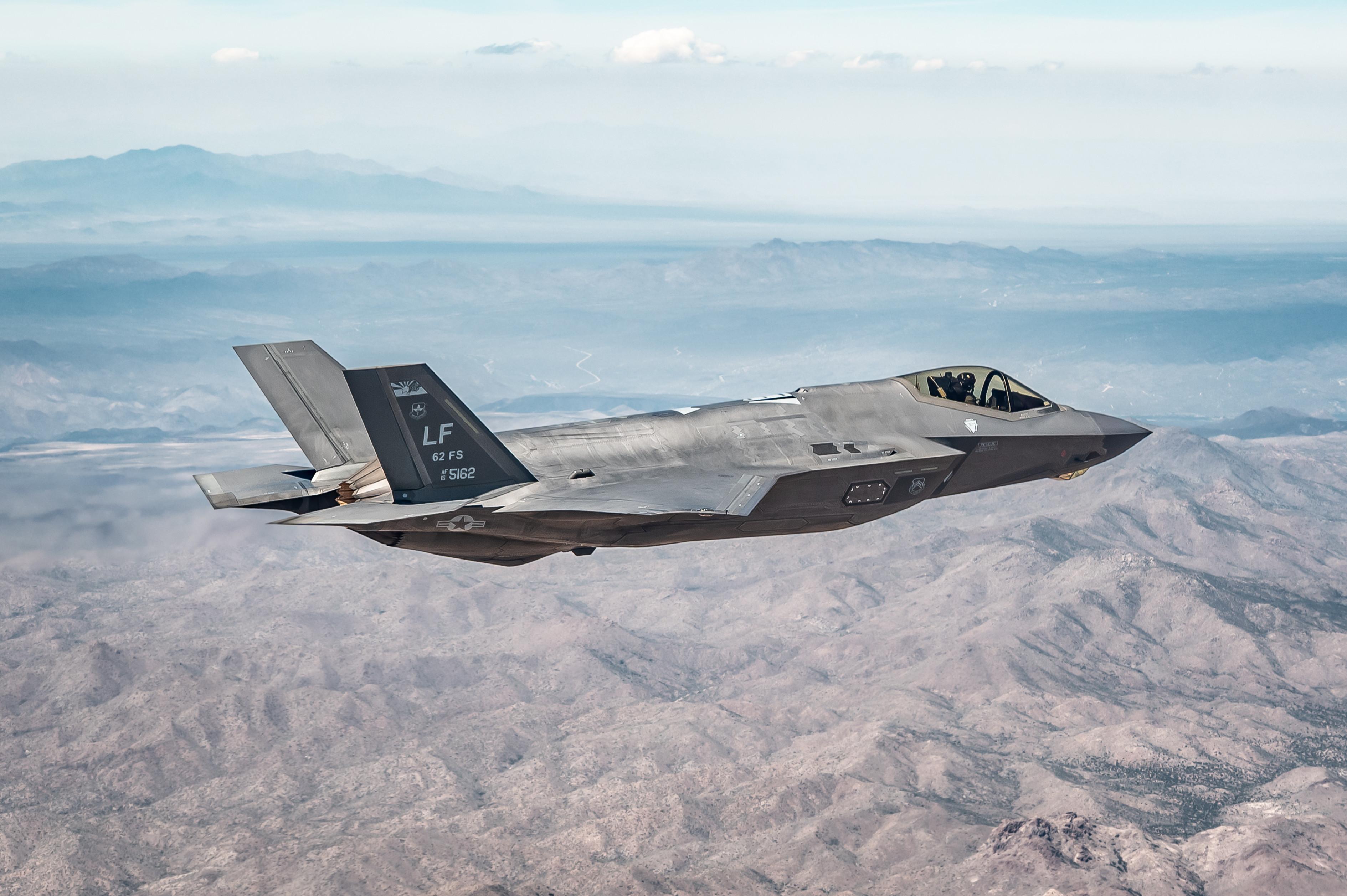
WASHINGTON, Oct. 26, 2026 — Lockheed Martin has agreed to a 10-year framework with the U.S. Department of Defense covering the production and sustainment of at least 850 F-35 Lightning II fighter jets, while committing at least $7 billion of its own funds to strengthen the program’s industrial base.
The agreement is valued at a minimum of about $78 billion based on the lowest-priced F-35 variant and is designed to provide greater stability for production, maintenance and the supply chain.
Under the framework, Lockheed Martin plans to maintain production at approximately 156 F-35 aircraft per year for U.S. and international customers. The arrangement also covers international orders, initial spare parts, modification kits and sustainment support.
The F-35 is a fifth-generation stealth fighter designed to reduce its detectability by enemy radar while combining advanced sensors, data processing and network capabilities. The aircraft has become a central part of Lockheed Martin’s aeronautics business, which accounts for nearly 40% of the company’s quarterly revenue.
$7 Billion Investment
Lockheed Martin will self-fund at least $7 billion in initiatives supporting the F-35 program.
The investment is expected to expand production capacity, strengthen the supplier base, increase tooling and workforce capabilities, and establish additional repair facilities.
As the worldwide F-35 fleet continues to grow, maintenance and repair requirements have also increased. Lockheed Martin executives said some smaller suppliers currently use the same equipment and personnel for both manufacturing and repair operations, creating additional pressure on production capacity.
The company expects its investment to help separate repair activities from new-part production and reduce supply-chain bottlenecks.
Agreement Still Requires Congressional Approval
Despite its size, the framework does not yet represent a final sales order.
Lockheed Martin and the F-35 Joint Program Office will finalize pricing, delivery schedules and other contract terms if Congress grants authority for a multiyear procurement program and provides the necessary funding.
The minimum value of the planned aircraft purchase is based on an F-35A price of approximately $92 million. The F-35B, operated by the U.S. Marine Corps, costs about $121 million, while the carrier-capable F-35C is priced at approximately $110 million. The final value could therefore increase depending on the mix of aircraft ordered, inflation and labor costs.
Lockheed Raises 2026 Forecast
The F-35 agreement comes as Lockheed Martin benefits from strong demand for military aircraft, missiles and air-defense systems.
The company raised its 2026 sales forecast to between $80 billion and $82 billion, compared with its previous estimate of $79.75 billion to $81.75 billion.
It also increased its full-year earnings-per-share forecast to between $30.35 and $30.75, up from $29.95 to $30.65.
Lockheed Martin reported third-quarter revenue of $20.71 billion, an 11% increase from the same period a year earlier. Its backlog reached a record $292 billion, boosted in part by a $52.5 billion multiyear award for PAC-3 missile interceptors.
Expanding Global F-35 Fleet
The long-term production framework reflects the growing importance of the F-35 program to the U.S. and its international partners.
Lockheed Martin estimates that the agreement could support approximately 317,000 U.S. jobs and generate nearly $79 billion in annual economic activity over the next decade.
For Lockheed Martin, the challenge will be expanding production and maintenance capacity while keeping suppliers capable of meeting demand. For the Pentagon, the multiyear approach is intended to provide more predictable production and potentially reduce costs through greater manufacturing volume.
If ultimately approved and funded by Congress, the framework would give Lockheed Martin significantly greater certainty over F-35 production for the coming decade while supporting the continued expansion of one of the world's largest fighter aircraft programs.








Facebook Comments