
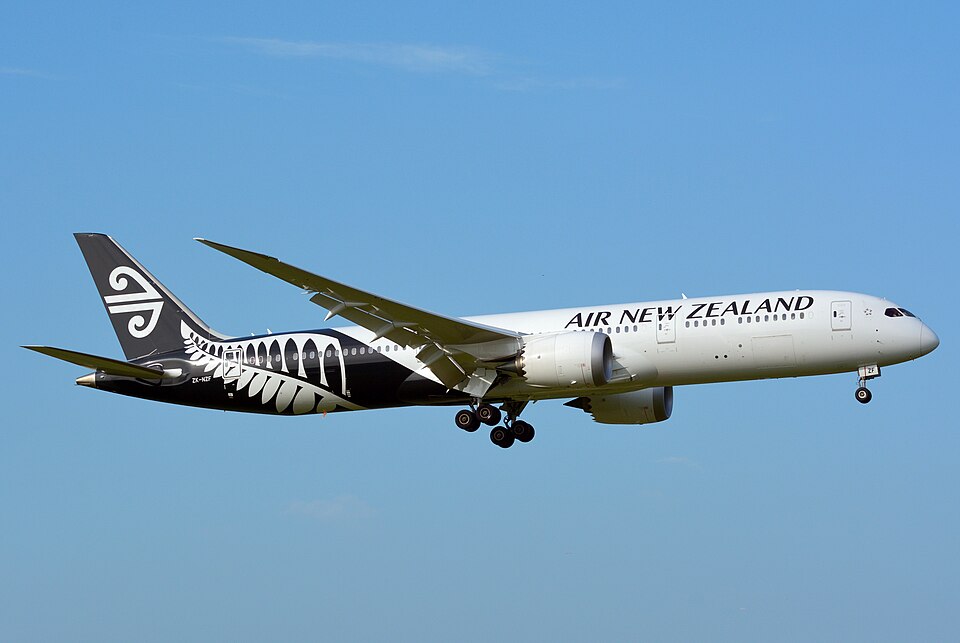
WELLINGTON, Sept. 27, 2026 — A 2024 engine fire involving an Air New Zealand ATR 72-600 has exposed a serious maintenance and evacuation safety issue after investigators found that a fatigued low-pressure turbine blade failed shortly after the engine had undergone a major overhaul.
The incident occurred on September 1, 2024, as the aircraft, operating from Christchurch to Wellington, was approaching Wellington Airport with 70 passengers and four crew members on board.
The aircraft’s left Pratt & Whitney Canada PW127M engine developed a low-oil-pressure warning during the approach. The warning subsequently progressed to an engine-fire indication, prompting the crew to declare a Mayday and land the aircraft safely.
After landing, the crew discharged fire suppressant into the affected engine. However, the fire warning remained illuminated, leading the captain to order an emergency evacuation.
Hidden Turbine Crack Led to Engine Failure
According to the Transport Accident Investigation Commission (TAIC), the engine failure was caused by the fracture of a low-pressure turbine blade as a result of fatigue cracking.
The blade failure created significant vibration inside the engine, damaging internal air seals and allowing oil to enter the engine. The oil subsequently burned, producing heavy smoke and flames from the engine exhaust.
The investigation found that the engine had undergone an overhaul less than four flying hours before the incident.
TAIC concluded that the fatigue cracking was likely already present during the overhaul but was not detected through the manufacturer’s quality-assurance process.
Further examination also identified fatigue cracking on a second low-pressure turbine blade from the same engine, raising concerns about the ability of the overhaul inspection process to detect similar defects before components return to service.
Evacuation Took 171 Seconds
The investigation also identified significant safety lessons concerning the aircraft evacuation.
The evacuation took 2 minutes and 51 seconds, or 171 seconds, considerably longer than the 90-second certification benchmark used for aircraft evacuation testing.
Although everyone on board successfully evacuated, some passengers suffered minor injuries, mainly strains associated with exiting the aircraft.
Investigators also found that more than half of the passengers took carry-on baggage with them despite being instructed to leave their belongings behind.
TAIC said passengers carrying bags caused delays at the exits, while some passengers also moved toward the area of the previously burning engine and propeller after leaving the aircraft.
Air New Zealand Introduces Safety Improvements
Following the investigation, Air New Zealand has taken steps to improve its emergency evacuation procedures.
The airline has strengthened training involving the ATR's rear service door, updated passenger safety briefing material and worked to align evacuation commands across its aircraft fleets.
TAIC has also recommended that Air New Zealand review its evacuation training, safety briefings, safety cards and evacuation commands to improve crew and passenger preparedness.
The investigation found that the flight and cabin crews responded effectively to the rapidly developing emergency, landing the aircraft safely and initiating the evacuation after the fire warning remained active.
Recommendations for Pratt & Whitney Canada
TAIC has recommended that Pratt & Whitney Canada strengthen its engine overhaul quality-assurance procedures so that fatigue cracks and similar defects can be identified before components return to service.
The investigation found that the turbine blade fatigue was likely present when the engine underwent its recent overhaul, although investigators could not definitively establish exactly when the cracking began.
The case highlights the importance of effective inspection and quality-assurance processes for aircraft engine components, particularly where fatigue damage can develop without being immediately visible.
The incident also demonstrates that aircraft safety during an emergency depends not only on preventing technical failures but also on the speed and discipline of evacuation once an emergency occurs.
Source: Transport Accident Investigation Commission (TAIC)



Facebook Comments