
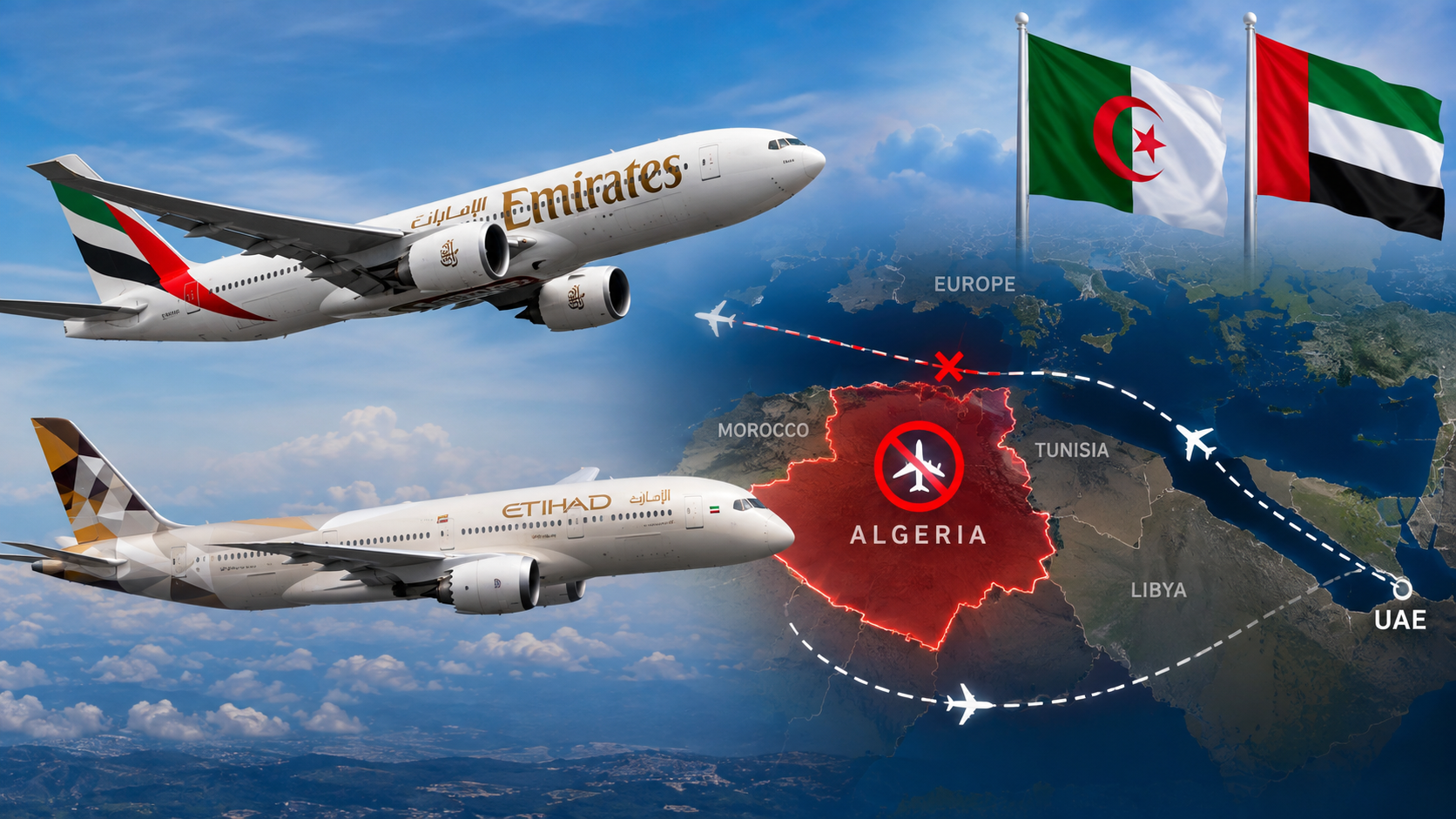
ALGIERS, Sept. 14, 2026 — A growing diplomatic dispute between Algeria and the United Arab Emirates has spilled into aviation, with Algeria restricting its airspace to UAE-registered civilian and military aircraft.
The restriction took effect on September 11, following Algeria’s decision to sever diplomatic relations with the UAE. The move could affect major UAE carriers, including Emirates and Etihad Airways, particularly on flights operating between the Gulf and destinations in Europe and North Africa.
However, commercial UAE flights operating to and from Algiers Houari Boumediene Airport have been temporarily exempted from the airspace restriction until the end of 2026. This means Emirates and other UAE carriers can continue their direct commercial operations to Algiers during the exemption period.
Longer Routes Could Increase Costs
The biggest operational impact could come from flights that normally use Algerian-controlled airspace while connecting the UAE with destinations farther west in Europe and North Africa.
Airlines may need to use alternative routes around Algerian airspace. Such diversions could increase flight distances, flying times, fuel consumption and operating costs, depending on the alternative routes available.
Services such as Etihad’s Abu Dhabi–Malaga and Emirates’ Dubai–Casablanca operations could therefore require additional route planning if the restrictions remain in place.
Diplomatic Dispute Behind the Restrictions
Algeria announced the diplomatic break on September 10, accusing the UAE of what it described as “provocative and hostile” actions. The Algerian government did not identify a single incident as the cause of the decision.
The UAE has expressed hope that the diplomatic rupture will be temporary and said it remains committed to maintaining ties between the two countries and their peoples.
The two countries had already experienced growing disagreements over regional political issues, while Algeria had also begun moving to terminate its existing air services agreement with the UAE.
Impact on Gulf-Europe Connectivity
For Emirates and Etihad, the situation highlights how quickly geopolitical tensions can affect airline network planning. Gulf carriers rely heavily on international connecting traffic, making access to major air corridors particularly important for maintaining efficient schedules.
For now, the direct commercial exemption to Algiers provides some protection. However, if the broader airspace restrictions continue beyond 2026, UAE airlines could face higher operating costs and longer flight times on some Europe and North Africa routes.
The longer-term impact will depend largely on whether diplomatic relations improve and whether Algeria modifies or extends the current aviation restrictions.



Facebook Comments