
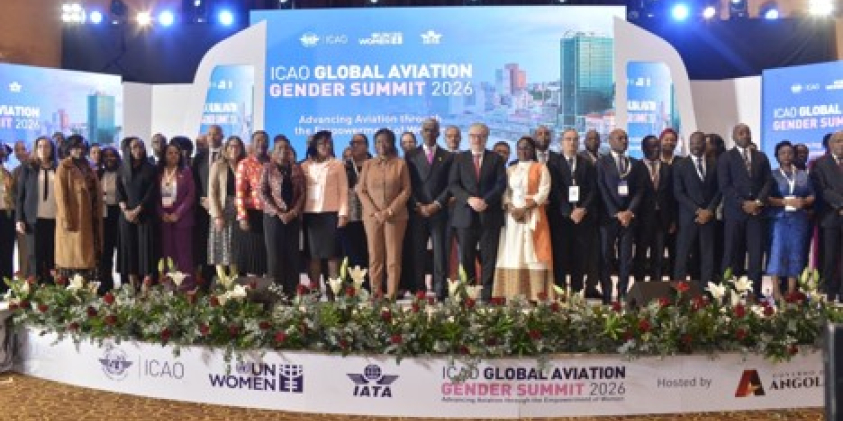
LUANDA, Angola — Advancing women's empowerment across the global aviation sector took center stage at the ICAO Global Aviation Gender Summit in Luanda, Angola. Hosted by the Government of Angola in partnership with UN Women and the International Air Transport Association (IATA), the summit brought together over 950 participants from governments, industry, international organizations, and academia. Delegates addressed structural barriers and mapped out concrete actions to attract, retain, and advance women throughout the global aviation workforce. ICAO Secretary General Juan Carlos Salazar emphasized that unlocking the full potential of women is not just a strategic imperative, but an essential step toward building an innovative, sustainable, and future-ready aviation industry.
Despite ongoing global initiatives, women remain starkly underrepresented in core technical and operational roles, accounting for roughly 4% of professional pilots, 3% of aircraft maintenance engineers, and 20.6% of air traffic controllers worldwide. To tackle these disparities, the summit highlighted the critical need for standardizing sex-disaggregated data. Delegates urged civil aviation authorities and industry leaders to collect and analyze gender data systematically to establish clear benchmarks, track retention rates, and hold organizations accountable for measurable progress over time.
Moving forward, the summit identified several high-priority actions for the international community. Priority must be given to creating early STEM pathways, scholarships, and targeted upskilling in emerging technologies and green tech. Equally vital is building inclusive workplace cultures through modernized recruitment practices, pay equity, flexible working arrangements, and robust safety protocols. Ultimately, attendees agreed that gender equality must be integrated into core workforce planning, ensuring the global aviation ecosystem remains resilient and well-equipped to meet future demand.



Facebook Comments