
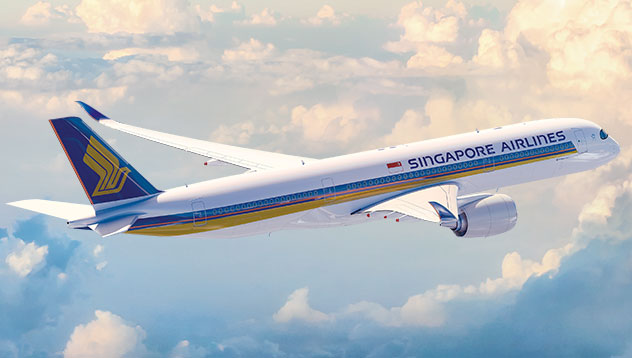
 The aviation landscape in Australia and the Asia-Pacific region reached a historic milestone on March 24, 2026, as Singapore Airlines (SIA) officially announced its landmark decision to become one of the first international carriers to operate out of the brand-new Western Sydney International (Nancy-Bird Walton) Airport (WSI). This strategic expansion, set to commence on November 23, 2026, represents a seismic shift in how travelers will access the Greater Sydney region, effectively breaking the long-standing monopoly of the curfew-restricted Sydney Kingsford Smith Airport. By committing to a daily non-stop service between Singapore Changi and Western Sydney, SIA is not merely adding a new pin to its global map; it is anchoring itself as a foundational partner in Australia’s most significant infrastructure project of the decade. The decision to launch these flights nearly eight months before the airport’s operational debut underscores the airline's immense confidence in the economic engine of Western Sydney, an area currently home to over three million residents and projected to grow faster than any other urban corridor in the country.
The technical specifics of the new service highlight a meticulously planned operation designed to maximize the unique advantages of a 24-hour airport. Singapore Airlines will deploy its state-of-the-art Airbus A350-900 medium-haul aircraft on the route, featuring a dual-class configuration of 303 seats, including 40 lie-flat Business Class pods and 263 ergonomically designed Economy Class seats. The schedule is particularly noteworthy for its "late-night" advantage. Flight SQ202 is slated to depart Western Sydney at 11:55 PM—a time when all operations at Kingsford Smith have long since ceased due to the strict 11:00 PM curfew. This allows passengers to enjoy a full day of work or leisure in Sydney before boarding a red-eye flight that lands in Singapore at 5:05 AM the following morning. For business travelers and transit passengers, this timing is gold; it provides seamless connectivity to SIA’s massive European and North Asian networks, allowing for morning meetings in London, Tokyo, or Mumbai without the "dead time" typically associated with midday departures from traditional airports.
Furthermore, this move solidifies a "dual-airport" strategy for Singapore Airlines in the Sydney basin. Rather than relocating services, SIA will maintain its existing four-times-daily flights to Sydney Kingsford Smith, bringing its total daily frequency to five flights across the two gateways. This provides unparalleled flexibility for passengers who can now choose an arrival or departure point based on their proximity to the CBD or the booming Western suburbs. For the residents of Parramatta, Penrith, and the Blue Mountains, the arrival of SIA at WSI eliminates the grueling two-hour commute across the city to the old airport, effectively bringing global connectivity to their doorstep. From a logistics perspective, the 24-hour nature of WSI also opens up significant belly-hold cargo opportunities, ensuring that high-value exports from Western Sydney’s burgeoning manufacturing and agricultural sectors can reach Asian markets without the bottlenecks of daytime congestion.
As the first Star Alliance member to sign on for WSI, Singapore Airlines has set a precedent that is expected to trigger a "domino effect" among other international legacy carriers. The announcement has been met with widespread acclaim from government officials and tourism boards, who view the SIA partnership as a validation of the multi-billion dollar investment in the "Aerotropolis" surrounding the airport. With tickets officially going on sale progressively from March 25, 2026, the aviation industry is watching closely as this new chapter unfolds. This is more than just a new flight path; it is the dawn of a new era for Australian tourism, trade, and international relations, proving that the future of the nation's aviation industry is firmly rooted in the west. By the time the first A350 touches down on the WSI runway in late November, the map of global travel will have been permanently redrawn, favoring convenience, efficiency, and the ambitious spirit of a 24-hour global gateway.




Facebook Comments