
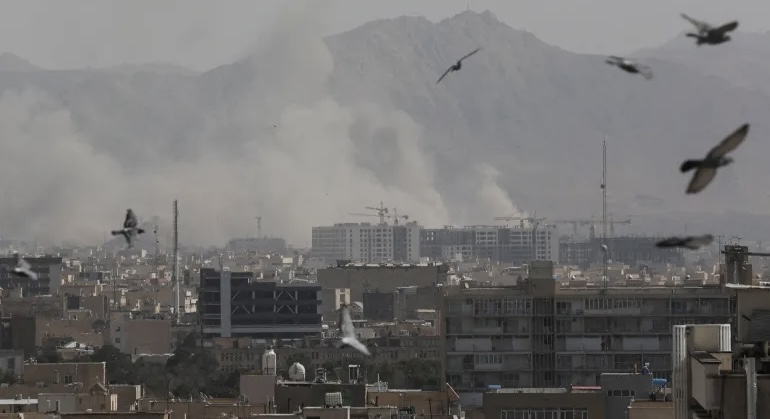
28 February 2026 – Major airspace across the Middle East has been closed and airlines worldwide have suspended flights following joint U.S. and Israeli strikes on Iran, marking one of the most serious regional escalations in recent years.
The attacks targeted strategic military infrastructure in Iran, including areas around Tehran, prompting retaliatory missile and drone strikes from Iran towards Israel and U.S. positions in the Gulf. Explosions and smoke were reported in multiple Iranian cities, raising concerns of a broader conflict.
Global Airspace Disruptions
In response to the escalating military situation, several countries closed civilian airspace, including:
• Iran
• Israel
• Iraq
• Jordan
• Qatar
• Bahrain
• Kuwait
• United Arab Emirates
• Parts of Syria
These closures have caused widespread disruptions, forcing airlines to cancel, delay, or reroute flights. Thousands of passengers have been affected globally as commercial aircraft avoid the restricted skies.
Airlines Suspend Flights
Major airlines impacted include:
• Turkish Airlines – canceled flights to several Middle Eastern destinations until at least 2 March.
• Qatar Airways – temporarily suspended operations in affected areas.
• Lufthansa Group – canceled flights to Tel Aviv, Beirut, Amman, and other key cities.
• Air France-KLM – rerouted or canceled services to Tel Aviv and Beirut.
• Air India and IndiGo – flights diverted to avoid closed airspace.
Airlines are advising passengers to check flight status directly, with many offering refunds or travel credits.
Airports and Travelers Affected
Ben Gurion Airport (Israel) has paused civilian operations, while inbound flights to Iran and surrounding regions are being diverted or held outside restricted airspace. Major Middle Eastern air corridors, normally busy for Europe-Asia and Africa routes, have been heavily disrupted, impacting global aviation.
Authorities warn travelers to expect delays and cancellations over the coming days. The situation remains fluid as military actions and airspace restrictions continue to evolve.




Facebook Comments